Tooth Whitening.
Safe, dentist-supervised lightening of the natural tooth, usually done at home over two to four weeks.
What is tooth whitening?
Whitening uses a peroxide-based gel to lighten the natural colour of the tooth from within, breaking down the pigments that accumulate in enamel and dentine over time. Done under a dentist's supervision with custom-made trays, it is one of the safest and most conservative things we can do to improve the appearance of a smile, because nothing is removed from the tooth.
Why has this been recommended?
Whitening is often the first step in a cosmetic plan rather than the last. Lightening the natural teeth first means that any bonding, veneers or crowns afterwards can be matched to the brighter shade, and often means less restorative work is needed at all once the colour improves. It may also have been recommended before replacing older restorations that no longer match.
What to expect during treatment
Scans or impressions are taken and thin, close-fitting trays are made for you. At the fitting appointment you are shown how much gel to use and how to apply it, and your starting shade is recorded photographically so the change can be judged honestly at the end.
You then wear the trays at home, typically overnight or for a few hours daily, for two to four weeks depending on the gel strength and your starting colour. Deeply discoloured teeth, particularly grey tetracycline staining, take longer and improve less predictably. A single non-vital tooth that has darkened after root treatment can sometimes be whitened internally instead, which is a different technique.
Risks and possible complications
Sensitivity is the common side effect, affecting a good proportion of people to some degree. It is temporary, resolves once treatment finishes, and can usually be managed by reducing wear time, using a desensitising gel, or taking a break for a day or two. Gum irritation happens if too much gel is used and the excess sits on the gum; using less solves it.
Whitening does not lighten crowns, veneers, composite bonding or fillings. If you have visible restorations at the front, they will stay the colour they are and may need replacing afterwards to match. Results vary between individuals and cannot be precisely predicted in advance. Whitening is not appropriate during pregnancy or breastfeeding.
Benefits and expected outcomes
For most people whitening produces a noticeable, natural improvement of several shades, achieved without touching the tooth surface. It is the highest-impact, lowest-risk cosmetic treatment available, and it is inexpensive relative to everything else. Many patients find that after whitening and a hygiene visit, the more invasive work they were considering is no longer necessary.
Aftercare and home care
For the first 48 hours after finishing, avoid strongly coloured food and drink, as teeth are temporarily more porous. After that, the main determinants of how long it lasts are coffee, tea, red wine and smoking.
Keep your trays. Most people top up for a night or two every six to twelve months, which maintains the result indefinitely at very little cost. Continue normal brushing and interdental cleaning, and use a straw for iced coffee if you drink it often.
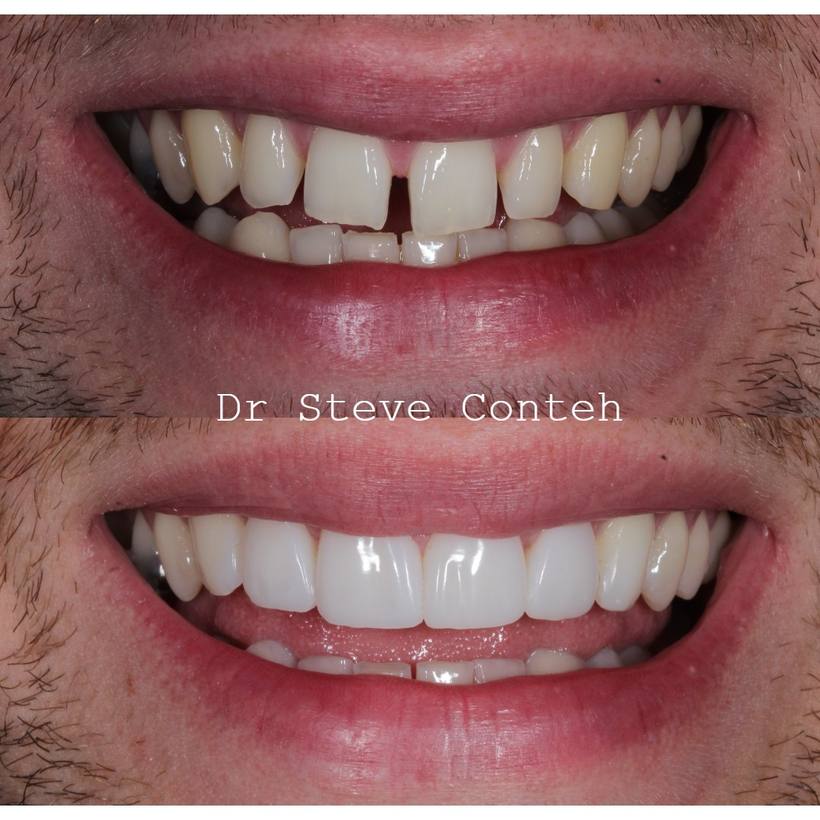
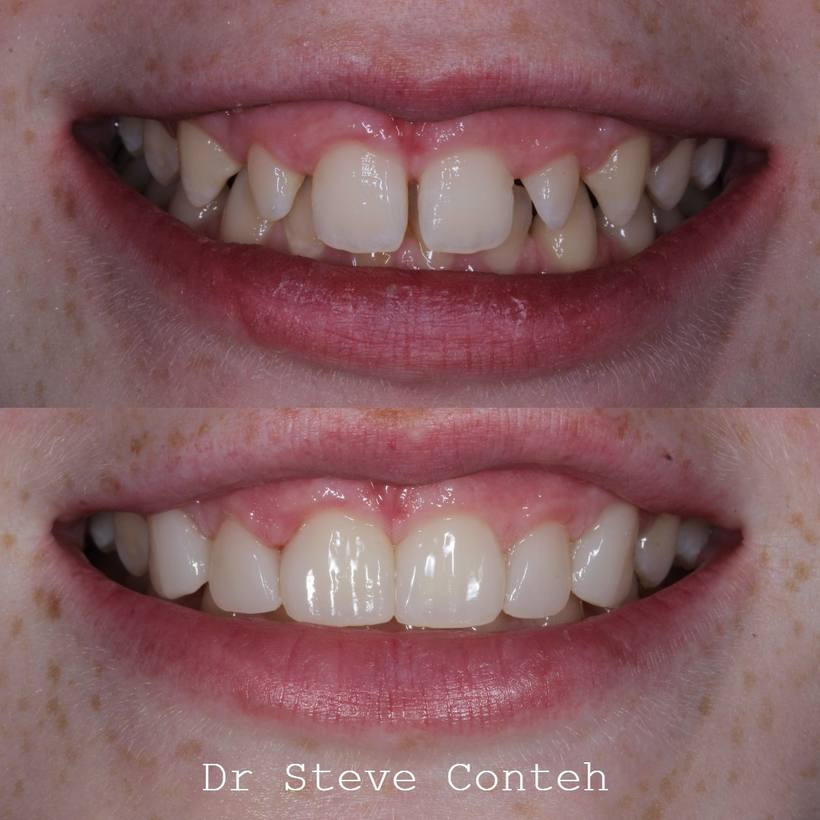
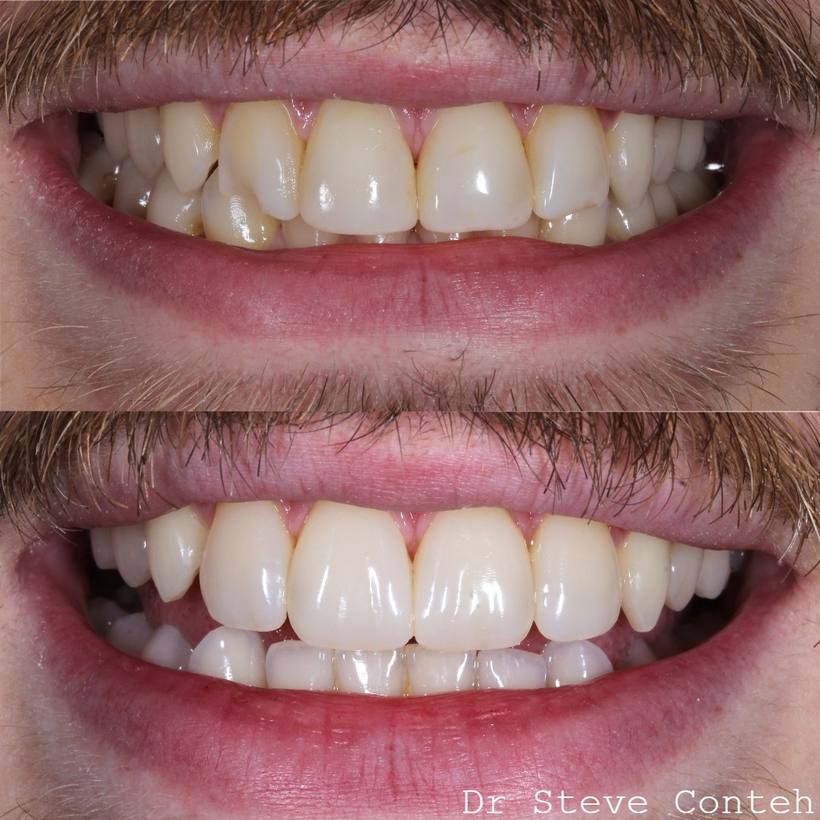
Tooth Whitening: before and after
Common questions
Does teeth whitening damage enamel?
How long does whitening last?
Will whitening work on my crowns or bonding?
Are whitening kits bought online safe?
This page is written by Dr Steve Conteh, BDS (Hons) MSc, GDC 251055, and is general information rather than advice for your particular mouth. Your own plan, costs and risks are set out in writing before any treatment begins. Last reviewed August 2026.
Ask me about your own case
Every case begins with an unhurried consultation: a proper look, a proper listen, and a written plan you can take away and think about. There is never any pressure to proceed.