A brighter smile, safely.
Gentle whitening of your own teeth, supervised by me and done at home over two to four weeks. Nothing is removed from the tooth.
What is tooth whitening?
Whitening uses a gel to lighten your teeth from within, gently breaking down the pigments that build up inside them over the years. Done properly, with trays made to fit your own mouth and with me keeping an eye on things, it is one of the safest and kindest ways to improve a smile, because nothing whatsoever is taken away from the tooth.
Why I have suggested this for you
Whitening is usually the first step in a cosmetic plan and not the finishing touch. Lightening your natural teeth first means anything we make afterwards can be matched to the brighter shade, and very often, once the colour has improved, you need far less work than you thought. I may also have suggested it before replacing older crowns or fillings that no longer match.
What actually happens
I take scans or impressions and have thin, close-fitting trays made just for you. At the fitting appointment I show you exactly how much gel to use and how to put it in, and we photograph your starting shade so that at the end we can both judge the change honestly instead of relying on memory, which is notoriously unreliable about teeth.
You then wear the trays at home, usually overnight or for a few hours each day, for two to four weeks depending on the strength of the gel and the colour you are starting from. Deeply discoloured teeth, particularly the grey staining caused by tetracycline antibiotics, take longer and are less predictable, and I will be honest with you about that from the outset. If it is a single dark tooth that has changed colour after a root filling, that can often be whitened from the inside instead, which is a different and rather satisfying technique.
The risks you should know about
Sensitivity is the common one, and a fair proportion of people get some to a degree. It is temporary, it goes once you finish, and we can usually settle it by shortening the wear time, using a desensitising gel or simply taking a night or two off. Do ring me instead of struggling on. Sore gums happen when a little too much gel is used and the excess sits on them, and using less sorts it out straight away.
Whitening does not lighten crowns, veneers, bonding or fillings at all. If you have any of those showing at the front, they will stay exactly the colour they are and may need replacing afterwards to match, so it is worth knowing that before you start. Results do vary from person to person and I cannot promise you a particular shade in advance. Whitening is also not suitable during pregnancy or while breastfeeding.
What you should get out of it
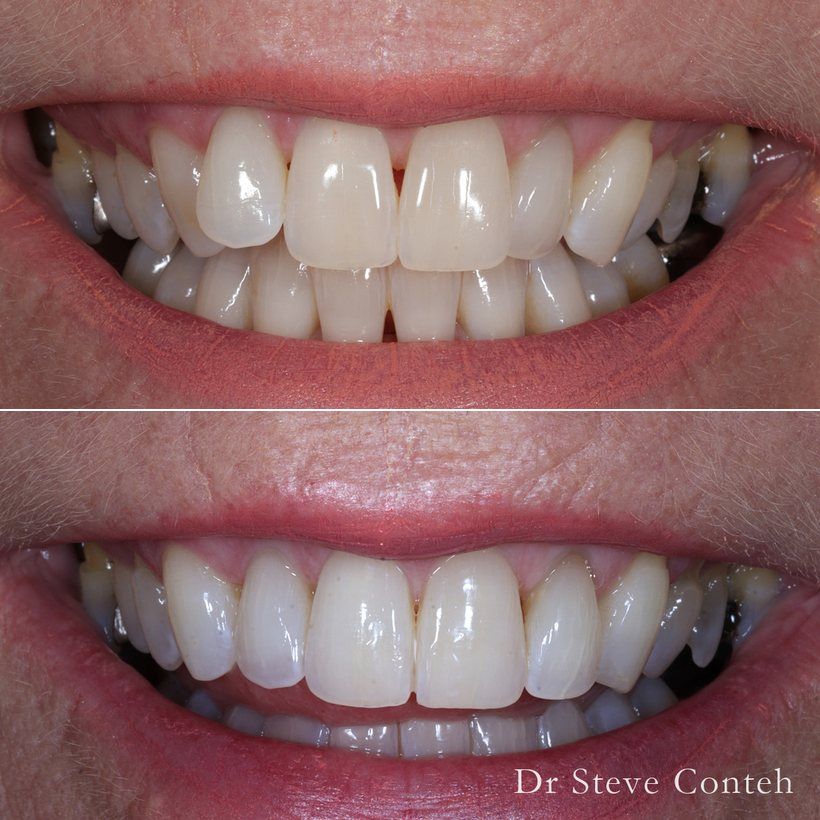
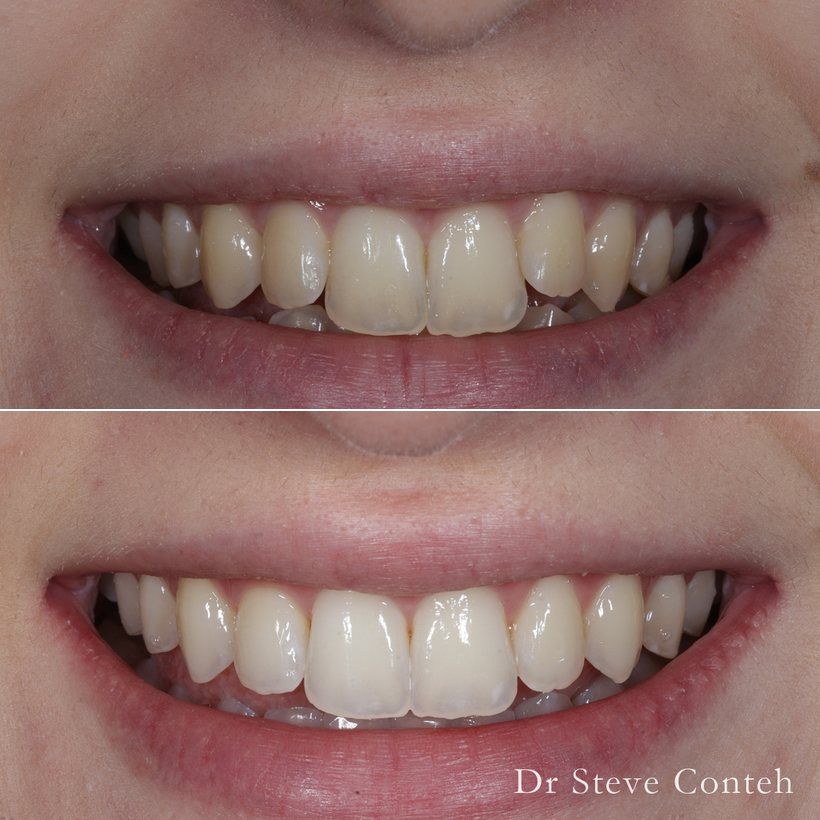
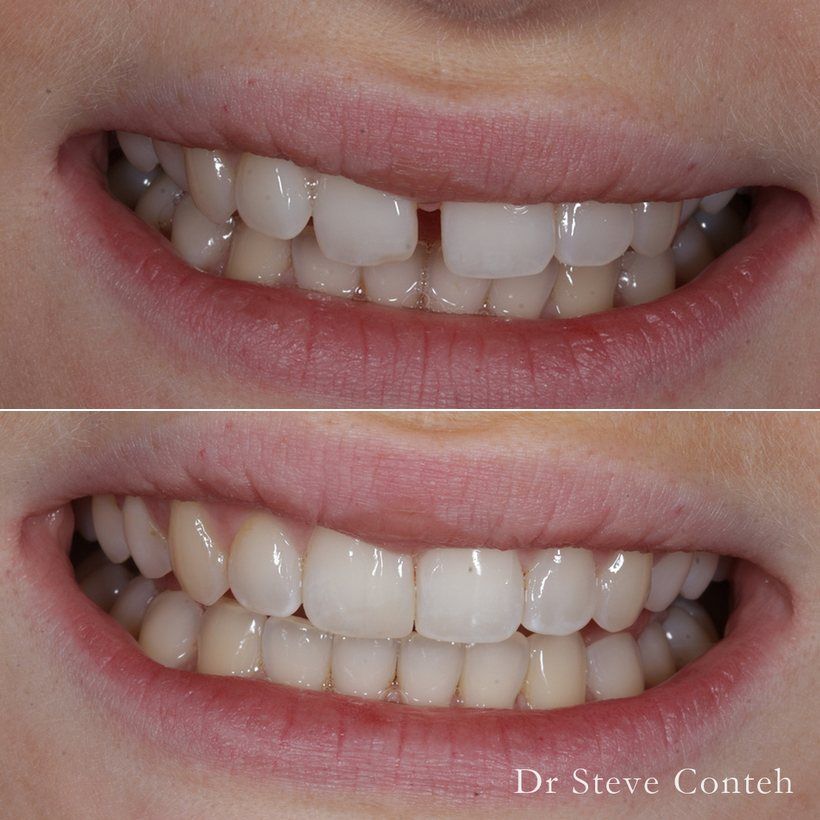
For most people whitening gives a noticeable, natural improvement of several shades, without touching the surface of the tooth at all. Pound for pound it is the cosmetic treatment that gives the most back for the least risk, and it costs a fraction of everything else. A good many of my patients find that after whitening and a hygiene appointment, the bigger work they came in asking about is no longer needed, and I am always pleased to tell them so.
Looking after it at home
For the first couple of days after you finish, keep away from strongly coloured food and drink, because your teeth are briefly a little more porous. After that, what really decides how long it lasts is your coffee, tea, red wine and whether you smoke.
Do keep your trays somewhere safe. Most people top up for a night or two every six to twelve months, which keeps the result going indefinitely for very little money. Carry on brushing and cleaning between your teeth as normal, and if you drink a lot of iced coffee, a straw genuinely helps.
Tooth Whitening: before and after
Questions patients often ask me
Does teeth whitening damage enamel?
How long does whitening last?
Will whitening work on my crowns or bonding?
Are whitening kits bought online safe?
Written by me, Dr Steve Conteh, BDS (Hons) MSc, GDC 251055. It explains the treatment in general terms so you can understand it. Your personal plan, with your costs and your risks, always comes to you in writing before anything begins. Please do bring your questions to your appointment. Last reviewed August 2026.
Tell me what is worrying you
The first appointment is a conversation more than anything else. I will listen properly, have a careful look, and then write everything down for you to take home. You can think about it for as long as you need. Nobody here will chase you.