Making room for an implant.
Gently lifting the floor of the sinus to create the height an implant needs at the back of the upper jaw. It sounds far worse than it is.
What is a sinus lift?
Your sinuses are air-filled spaces that sit just above the roots of your upper back teeth. When one of those teeth is lost, the bone underneath the sinus shrinks, and the sinus tends to drift down into the space. A sinus lift gently raises the delicate lining at the floor of the sinus and places graft material underneath it. That creates the height of bone we need to hold an implant properly. The sinus itself is not opened or entered, and your breathing is not affected.
Why I have suggested this for you
Your 3D scan has shown me there is not enough bone between the top of your jaw and the floor of your sinus to take an implant of a decent length. I could squeeze a shorter implant into the bone that is there, but it would be working harder than I would like and would not have as good an outlook. I would rather build the foundation properly first and give you something that lasts.
What actually happens
There are two ways of doing this and which one you need depends on how much height we have to gain. If it is only a few millimetres, I can do it through the implant site itself, easing the sinus floor upwards and placing the graft material through the same small opening. That barely lengthens your appointment and you heal much as you would from an ordinary implant.
If we need more height than that, I make a small opening in the side wall of your jaw, lift the sinus lining carefully away from the bone, and pack the graft material into the space. The opening is covered with a fine membrane and the gum closed with stitches that dissolve on their own. Depending on your case, the implant goes in at the same time or once the graft has matured, which takes six to nine months.
Both are done under local anaesthetic. You will be aware of some pressure and movement, which is quite normal, but you should not feel pain. If you do at any point, lift your hand and I will stop and top up the anaesthetic. Sedation is available too if you would feel happier with it.
The risks you should know about
The most common thing that happens is a small tear in the sinus lining as it is being lifted. This occurs in a minority of cases and I can usually patch it there and then with a membrane, and it often makes no difference to the result. Occasionally I will stop, let it heal and do it again another day, which is simply me being careful with you.
Other possibilities are infection, sinusitis, the graft not taking, a little bleeding from the nose in the days afterwards, and swelling or bruising that can be more noticeable than after a routine implant. Smoking makes graft failure considerably more likely. Please do tell me if you have had ongoing sinus trouble, nasal polyps or any previous sinus surgery, because it genuinely changes how I plan this.
What you should get out of it
A sinus lift that has worked makes implant treatment possible somewhere it simply would not have been, and lets me use a longer, better-supported implant. Your upper back teeth do an enormous amount of the chewing, so having a solid foundation there really matters. This is a well-established technique with decades of good results behind it, and success rates are high.
Looking after it at home
The most important thing is not to blow your nose for two weeks, however tempting it becomes. If you need to sneeze, sneeze with your mouth open so the pressure does not go up into the sinus. Please avoid flying, diving and drinking through a straw. Sleep with your head propped up a little for the first few nights, and take any antibiotics, decongestants or painkillers exactly as I have prescribed. Stick to soft food and leave the gym alone for a week. A little bleeding from the nose on that side in the first few days is normal and nothing to panic about. Do ring me if the pain is increasing instead of settling, if you have a discharge that will not clear, or if you develop a temperature.
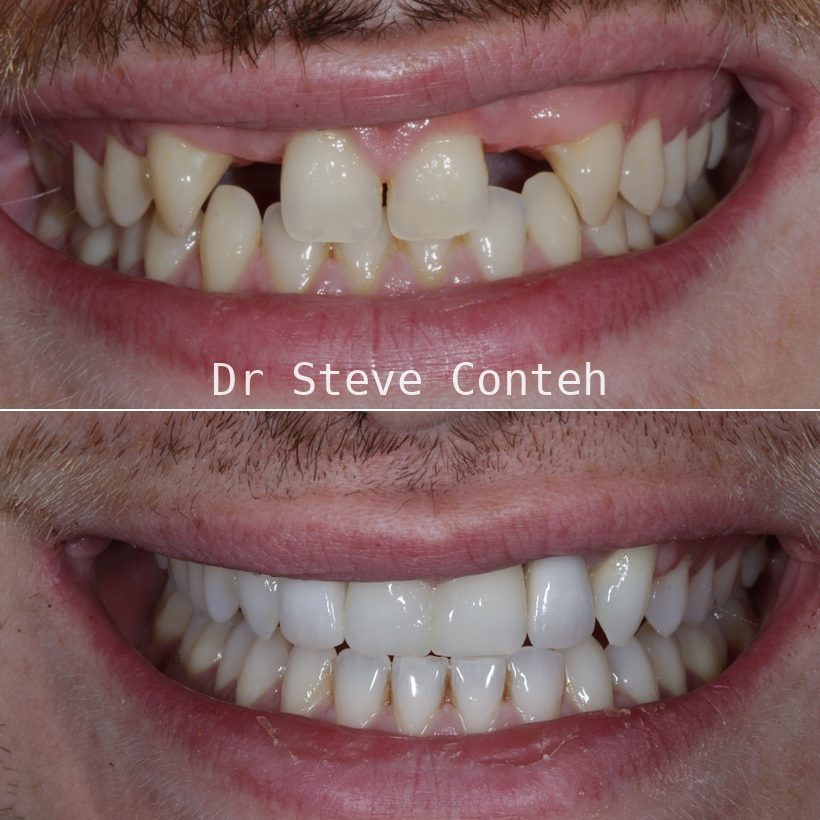
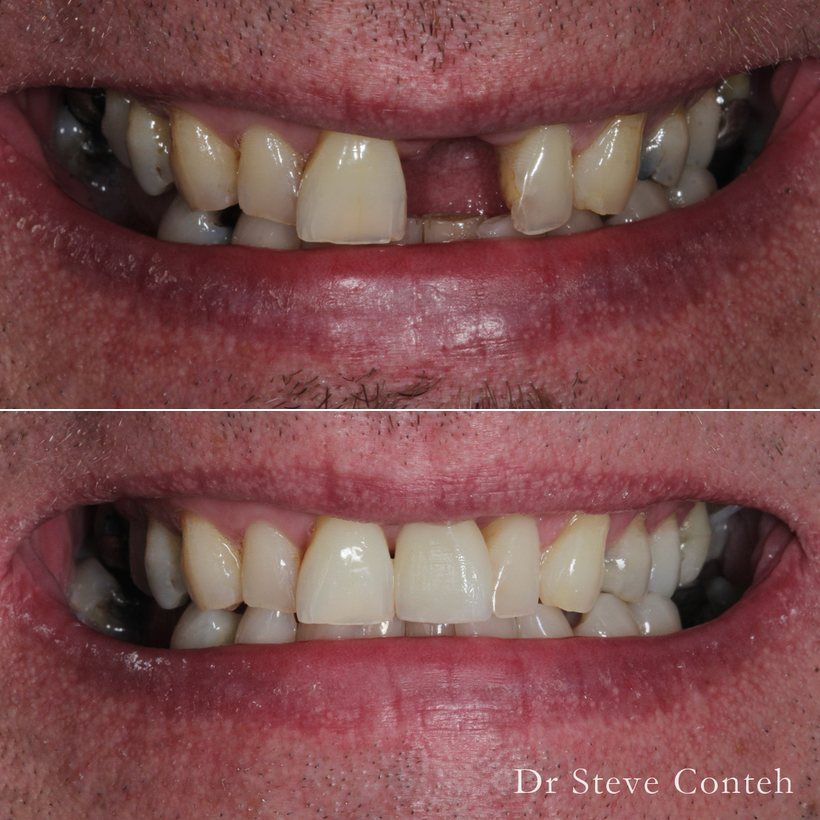
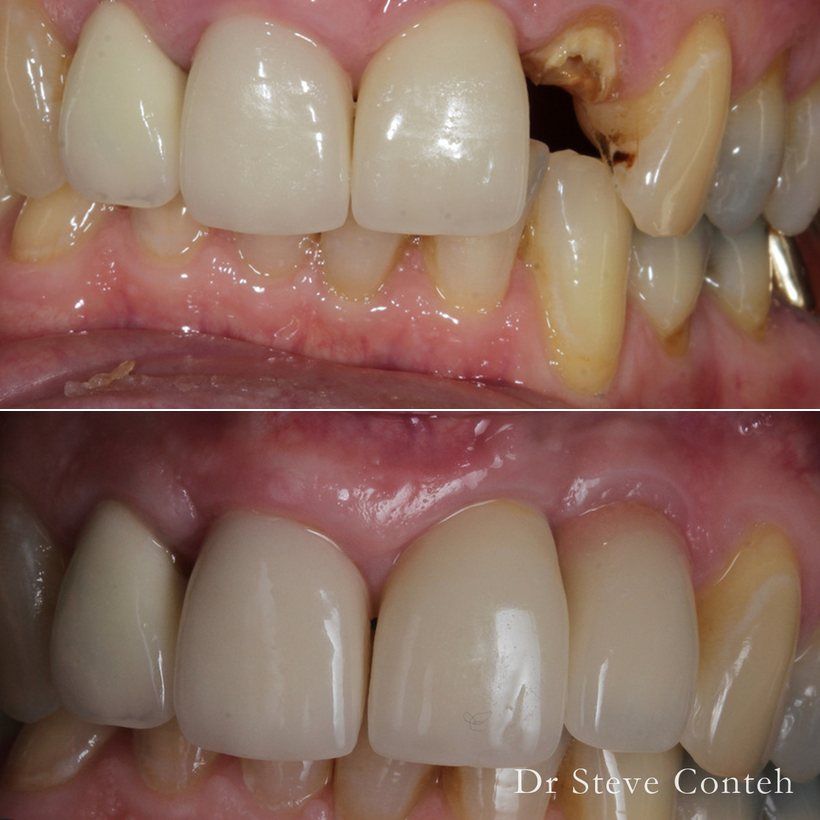
Implant results: before and after
Questions patients often ask me
Is a sinus lift painful?
How long before I can have the implant?
Will a sinus lift affect my breathing or sense of smell?
Written by me, Dr Steve Conteh, BDS (Hons) MSc, GDC 251055. It explains the treatment in general terms so you can understand it. Your personal plan, with your costs and your risks, always comes to you in writing before anything begins. Please do bring your questions to your appointment. Last reviewed August 2026.
Tell me what is worrying you
The first appointment is a conversation more than anything else. I will listen properly, have a careful look, and then write everything down for you to take home. You can think about it for as long as you need. Nobody here will chase you.