Sinus Lift.
Creating height for an implant in the upper back jaw by gently raising the floor of the sinus.
What is a sinus lift?
The maxillary sinuses are air-filled spaces sitting above the roots of your upper back teeth. When an upper back tooth is lost, the bone beneath the sinus tends to shrink, and the sinus itself can expand downwards into the space. A sinus lift, also called a sinus augmentation, gently raises the membrane lining the floor of the sinus and places graft material underneath it, creating the bone height needed to hold an implant securely.
Why has this been recommended?
Your CBCT scan has shown that the height of bone between the crest of your jaw and the floor of the sinus is not sufficient to place an implant of adequate length. Rather than place a short implant in compromised bone and accept a poorer prognosis, a sinus lift builds the foundation properly first.
What to expect during treatment
There are two approaches, and which one I use depends on how much height needs to be gained. Where only a few millimetres are required, the lift can be carried out through the implant site itself, gently tapping the sinus floor upwards and placing graft material through the same opening. This adds little to the length of the appointment and healing is much the same as for a routine implant.
Where more height is needed, a lateral window approach is used. A small opening is made in the side wall of the jaw, the sinus membrane is carefully lifted away from the bone, and graft material is packed into the space created. The opening is covered with a membrane and the gum closed with dissolvable stitches. The implant may be placed at the same time or after the graft has matured, which usually takes six to nine months.
Both are carried out under local anaesthetic. You will feel pressure and movement but should not feel pain.
Risks and possible complications
The most common complication is a small tear in the sinus membrane during lifting. This happens in a minority of cases, is usually repaired at the time with a membrane, and often does not affect the outcome, though occasionally the procedure is abandoned and repeated after healing.
Other risks include infection, sinusitis, graft failure, bleeding from the nose in the days afterwards, and swelling or bruising which can be more pronounced than for a routine implant. Smoking substantially increases the risk of graft failure. If you have a history of chronic sinus problems, nasal polyps or previous sinus surgery, tell me before we plan, as it changes the assessment.
Benefits and expected outcomes
A successful sinus lift makes implant treatment possible in a part of the mouth where it otherwise would not be, and allows a longer, better-supported implant to be used. Upper back teeth carry a great deal of chewing load, so the quality of that foundation matters. Success rates for sinus augmentation are high and the technique is well established, with decades of published outcomes behind it.
Aftercare and home care
For the first two weeks, do not blow your nose. If you need to sneeze, sneeze with your mouth open so that pressure is not forced up into the sinus. Avoid flying, diving, and using straws. Sleep with your head slightly raised for the first few nights. Take any prescribed antibiotics, decongestants or pain relief exactly as directed. Eat soft foods and avoid strenuous exercise for a week. A little bleeding from the nose on the operated side is not unusual in the first few days. Contact me if you develop increasing pain, persistent nasal discharge, or fever.
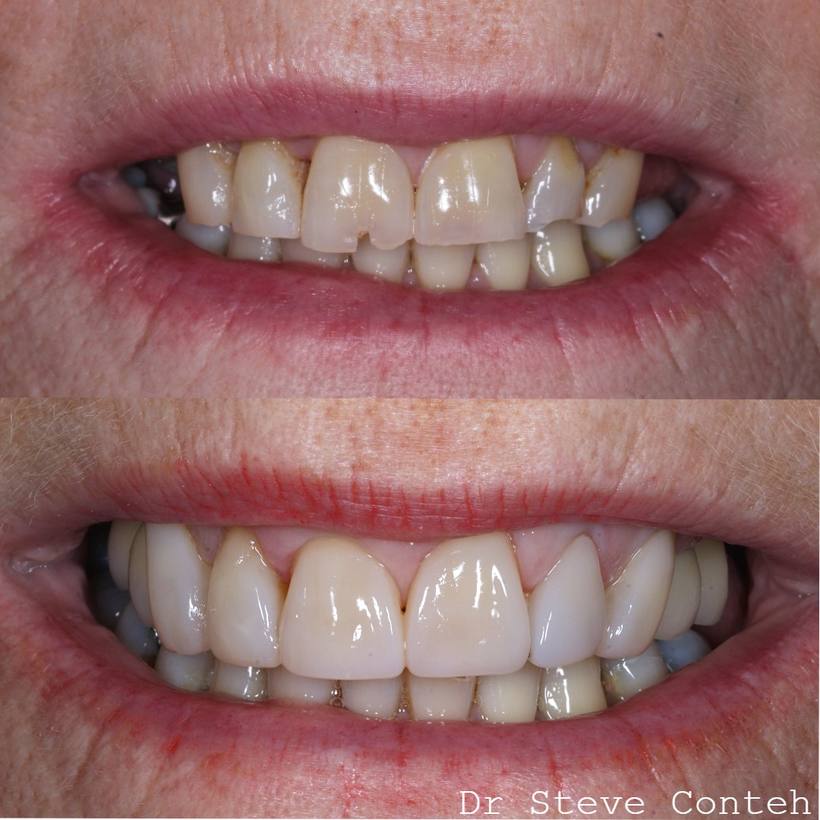
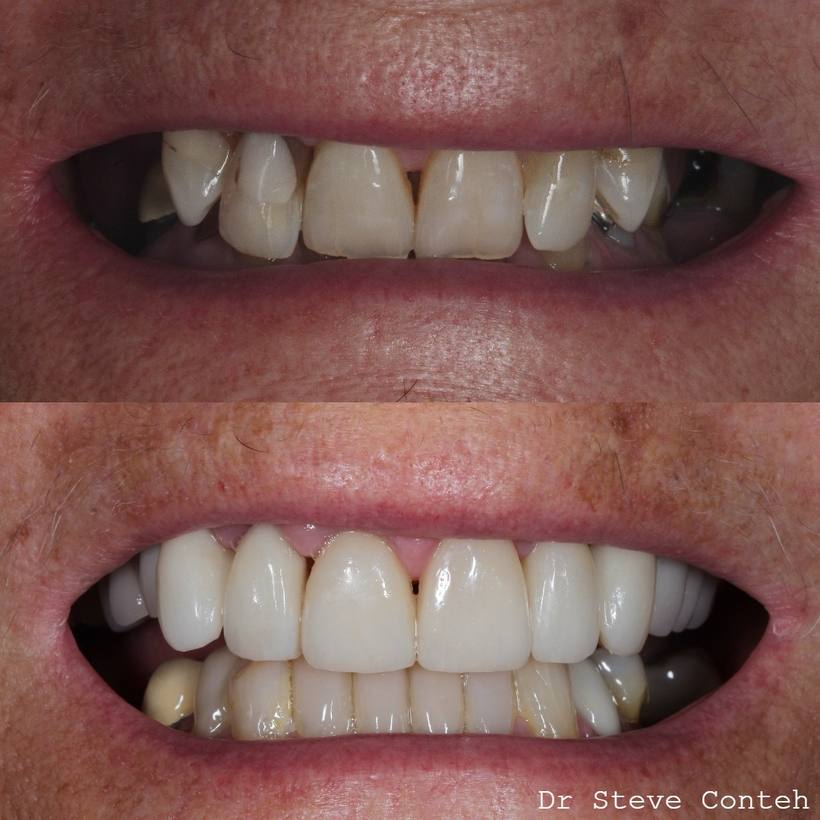
Sinus Lift: before and after
Common questions
Is a sinus lift painful?
How long before I can have the implant?
Will a sinus lift affect my breathing or sense of smell?
This page is written by Dr Steve Conteh, BDS (Hons) MSc, GDC 251055, and is general information rather than advice for your particular mouth. Your own plan, costs and risks are set out in writing before any treatment begins. Last reviewed August 2026.
Ask me about your own case
Every case begins with an unhurried consultation: a proper look, a proper listen, and a written plan you can take away and think about. There is never any pressure to proceed.