Single Tooth Implant.
Replacing one missing tooth with a titanium root and a custom crown, without touching the teeth either side.
What is a single tooth implant?
A dental implant is a small titanium post that is placed into the jawbone to replace the root of a missing tooth. Once the implant has healed and bonded to the bone, a process called osseointegration, a custom-made crown is attached on top to restore the appearance and function of your natural tooth. The result is a permanent, stable replacement that looks, feels, and functions very much like a real tooth.
Why has this been recommended?
A single implant is often the preferred option for replacing one missing tooth because it does not involve altering or relying on the teeth either side of the gap, as a bridge would. It preserves the health of neighbouring teeth, prevents bone loss in the jaw where the tooth was lost, and provides a long-term, fixed solution that can last many years with good care.
What to expect during treatment
Treatment takes place over several months and involves several stages. After a thorough assessment, which usually includes X-rays and a CBCT scan to evaluate the bone, the implant is placed under local anaesthetic in a straightforward surgical appointment. Most patients are surprised by how comfortable this is. You may experience some swelling, bruising, and mild discomfort for a few days afterwards, which is entirely normal and manageable with over-the-counter pain relief.
The implant is then left to heal and integrate with the bone over a period of approximately three to six months, depending on your individual healing. During this time, a temporary restoration may be provided to maintain appearance and function. Once integration is confirmed, impressions or scans are taken, and your permanent crown is made and fitted. The result is checked carefully for fit, comfort, and appearance before being secured in place.
Risks and possible complications
As with any surgical procedure, there are risks involved, and it is important that you feel informed before proceeding.
The most significant risk is implant failure, where the implant does not successfully bond with the bone, or fails at a later stage. This occurs in a small percentage of cases and can be influenced by factors such as smoking, uncontrolled diabetes, poor oral hygiene, or insufficient bone volume. If this happens, it is usually possible to remove the implant, allow healing, and try again.
Other risks include infection at the implant site, temporary nerve sensitivity in the surrounding area, damage to adjacent teeth or structures (rare with careful planning), and minor sinus involvement if the implant is placed in the upper jaw near the sinus. Prolonged numbness or altered sensation is rare but should be reported promptly if experienced.
There is also a small ongoing risk of a condition called peri-implantitis, a form of gum and bone inflammation around an implant, which is why long-term maintenance is essential.
Benefits and expected outcomes
The benefits of a well-placed, well-maintained implant are significant. You can expect a restoration that closely mimics a natural tooth in appearance and function, with no movement, no impact on neighbouring teeth, and a solution that can last many years, potentially decades, if looked after well. Implants also help to preserve the underlying bone, which naturally shrinks when a tooth is lost.
Satisfaction rates for single tooth implants are high, and most patients find that the result exceeds their expectations.
Aftercare and home care
Good oral hygiene is the single most important factor in the long-term success of your implant. You should brush twice daily with a soft-bristled toothbrush, clean around and beneath the implant crown daily using interdental brushes or floss, and use any cleaning aids recommended at your hygiene visits.
You should attend regular hygiene appointments, typically every three to six months in the first year, so that the implant and surrounding tissue can be professionally monitored and cleaned. Any signs of inflammation, bleeding, or discomfort around the implant should be reported promptly. Avoid excessive force on the implant, such as chewing ice or very hard foods, and if you grind your teeth at night, please let me know as a protective nightguard may be recommended.
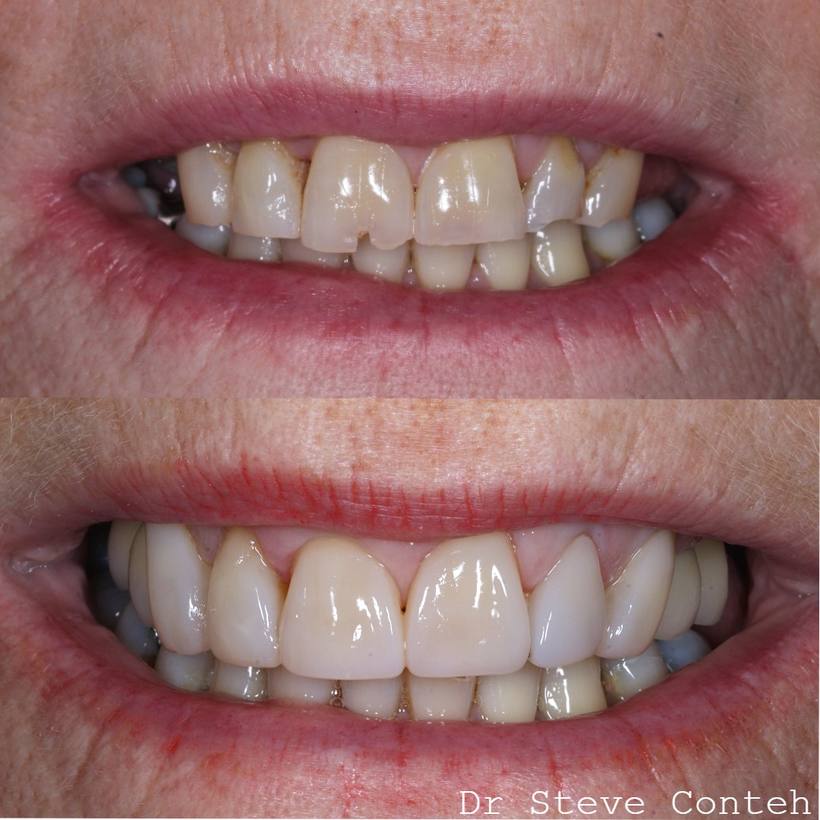
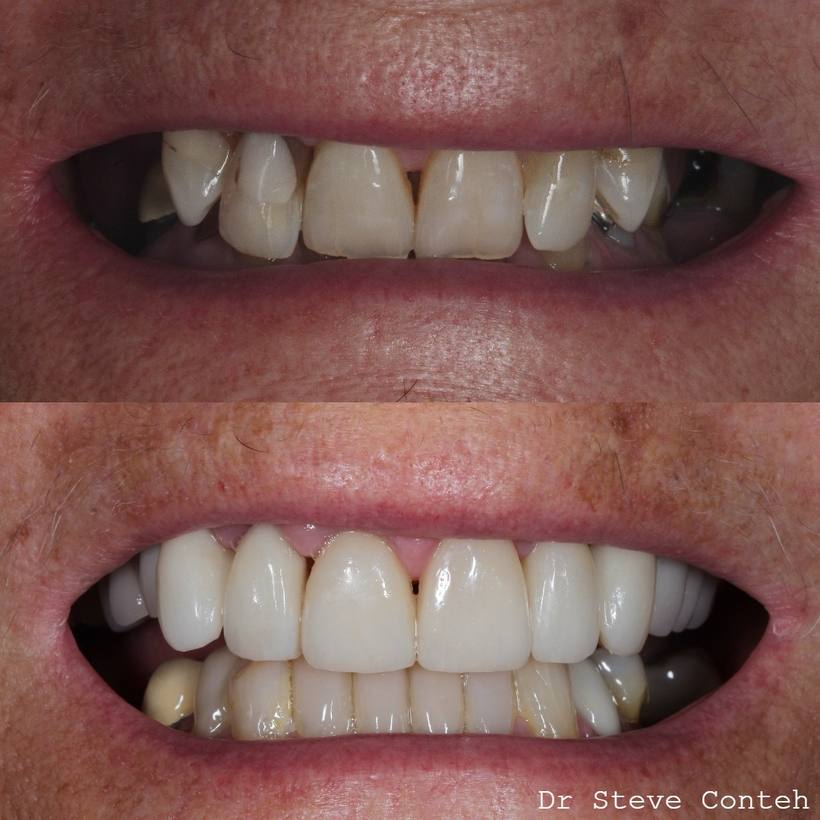
Single Tooth Implant: before and after
Common questions
How long does a single tooth implant take from start to finish?
Does having a dental implant hurt?
How long do dental implants last?
Is an implant better than a bridge?
This page is written by Dr Steve Conteh, BDS (Hons) MSc, GDC 251055, and is general information rather than advice for your particular mouth. Your own plan, costs and risks are set out in writing before any treatment begins. Last reviewed August 2026.
Ask me about your own case
Every case begins with an unhurried consultation: a proper look, a proper listen, and a written plan you can take away and think about. There is never any pressure to proceed.