Replacing a single tooth.
A new root and a crown made just for you, filling the gap and leaving the teeth on either side completely untouched.
What is a single tooth implant?
An implant is a small titanium post that I place into your jawbone, where it takes over the job your old tooth root used to do. Over the following months your bone actually grows onto its surface and grips it, which is a rather remarkable thing for a body to do. Once that has happened, I fit a crown on top that is made to match your own teeth in colour and shape. The result is a tooth that stays where it is, that you can bite on properly, and that most people forget is not their own.
Why I have suggested this for you
I have suggested an implant because it is usually the kindest way to fill a single gap. Unlike a bridge, it does not need the teeth either side drilled down to support it, so your healthy teeth stay healthy. It also keeps the bone in the gap being used, which stops it slowly shrinking away as it otherwise would. And it is fixed, so there is nothing to take out and nothing to think about, which should last you many years if you look after it.
What actually happens
Your treatment happens in stages across a few months, and I will always tell you what is coming next. It starts with a proper assessment, usually including x-rays and a 3D scan so I can see exactly how much bone you have and where everything sits. The implant itself goes in during one appointment under local anaesthetic. Most people are genuinely surprised by how straightforward it is, and quite a few nod off. Afterwards you can expect some swelling, perhaps a little bruising and some tenderness for a few days. That is all completely normal and ordinary painkillers from the chemist handle it well.
Then we simply let it heal. That takes somewhere between three and six months depending on how quickly you knit together, and if the gap would show, you will have a temporary tooth in the meantime so you never have to walk around with a space. Once I am happy the implant has taken, I take a scan and your crown is made. When it comes back we check it carefully together for fit, comfort and, importantly, whether you like how it looks, before it is fixed in place.
The risks you should know about
Any surgery carries some risk, and I would rather you heard all of this from me calmly now than worried about it later. These things are uncommon, but you should know about them before you decide.
The main one is that the implant does not bond properly with the bone, or gives up at a later stage. This happens in a small number of cases, and it is more likely if you smoke, if diabetes is not well controlled, if cleaning is difficult, or if there was not much bone to begin with. If it does happen, we can usually take the implant out, let the site heal and try again.
Other possibilities are infection around the implant, some temporary tingling or altered feeling nearby, damage to a neighbouring tooth or structure, which is rare when the planning has been done properly, and a little involvement of the sinus if the implant is in the upper jaw. Numbness that does not settle is unusual, but if you ever notice anything like that, please ring me straight away and do not sit on it.
There is also a small ongoing risk of peri-implantitis, which is inflammation of the gum and bone around an implant, rather like gum disease. That is precisely why the cleaning and the check-ups matter so much, and I will show you exactly what to do.
What you should get out of it
An implant that has been placed well and looked after well does a great deal for you. You get a tooth that looks and works like your own, that does not move when you bite, that leaves your other teeth alone, and that can last many years and often decades. It also keeps the bone underneath in good order, which otherwise shrinks away once a tooth has gone.
In my experience people are delighted with them, and the most common thing patients say to me at the review is that they have stopped noticing it altogether.
Looking after it at home
How well you clean it is genuinely the biggest thing that decides how long your implant lasts, which is good news, because that part is in your hands. Brush twice a day with a soft brush, and get in around and underneath the crown every day with interdental brushes or floss. We will show you exactly how, and there is no rush about learning it.
Please do come to your hygiene appointments, usually every three to six months in the first year, so we can keep an eye on things and clean them properly. If you notice any bleeding, soreness or puffiness around the implant, tell me sooner rather than later; small problems are easy to sort out. Try not to chew ice or anything really hard on it. And if you grind your teeth at night, do mention it, because a little nightguard will protect your investment beautifully.
Single tooth implants: before and after
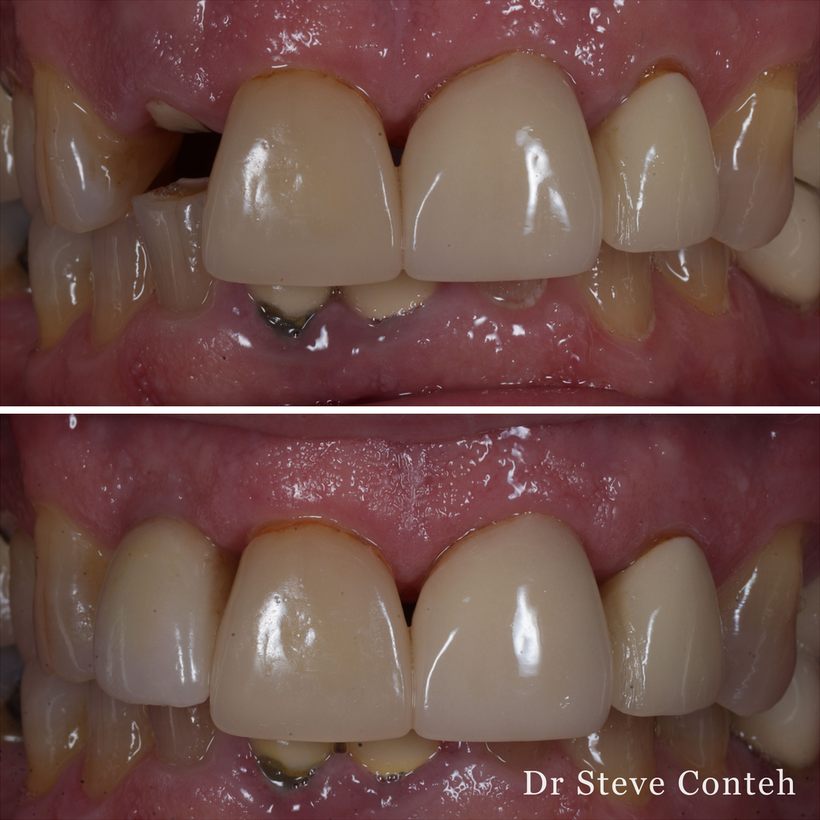
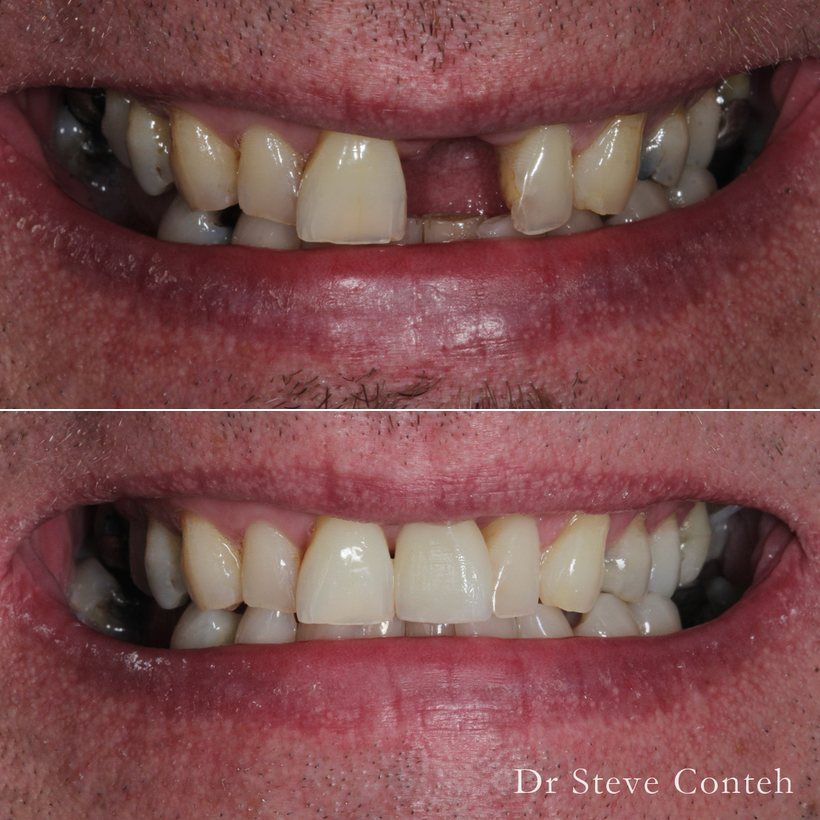
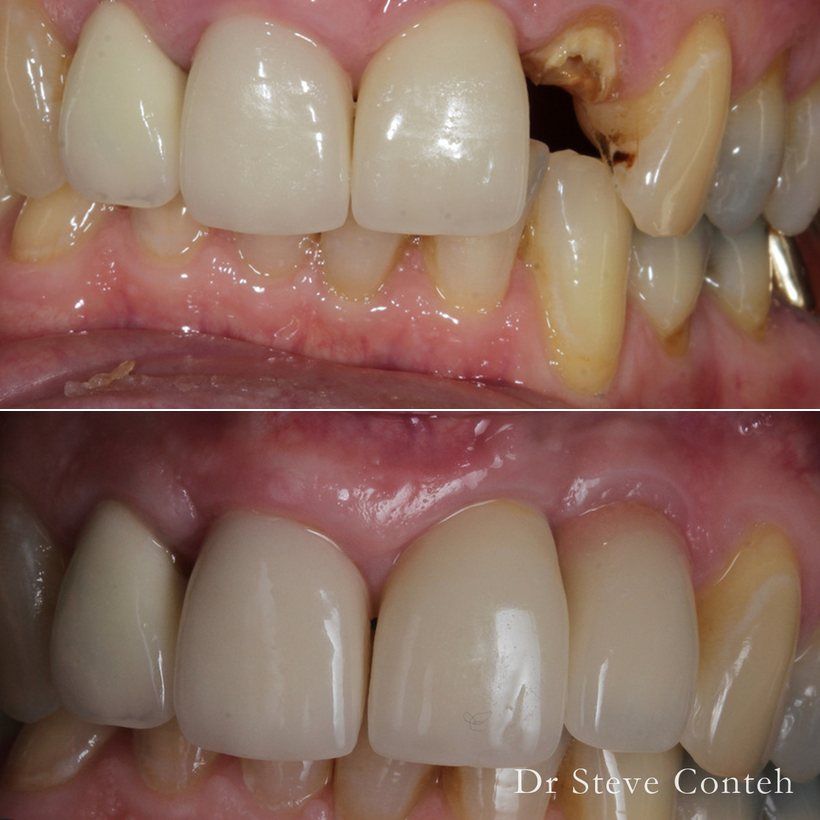
Questions patients often ask me
How long does a single tooth implant take from start to finish?
Does having a dental implant hurt?
How long do dental implants last?
Is an implant better than a bridge?
Written by me, Dr Steve Conteh, BDS (Hons) MSc, GDC 251055. It explains the treatment in general terms so you can understand it. Your personal plan, with your costs and your risks, always comes to you in writing before anything begins. Please do bring your questions to your appointment. Last reviewed August 2026.
Tell me what is worrying you
The first appointment is a conversation more than anything else. I will listen properly, have a careful look, and then write everything down for you to take home. You can think about it for as long as you need. Nobody here will chase you.