Porcelain Crowns and Bridges.
Laboratory-made restorations for teeth too broken down to rebuild directly, or to replace a missing tooth using the teeth either side.
What are porcelain crowns and bridges?
A crown is a laboratory-made covering that fits over a prepared tooth and restores its shape, strength and appearance. A bridge replaces a missing tooth by joining a false tooth to crowns on the teeth either side of the gap. Both are typically made from all-ceramic materials such as zirconia or lithium disilicate, which are strong and reproduce the translucency of enamel well.
Why has this been recommended?
A crown is recommended where a tooth is too heavily broken down, cracked or filled to be restored predictably with a direct filling, or after root canal treatment on a back tooth where the remaining structure is brittle. A bridge is one option for replacing a missing tooth, and I will only recommend it in preference to an implant where there is a good reason, for example where the neighbouring teeth already need crowning, or where implant treatment is not possible.
What to expect during treatment
At the preparation appointment the tooth is numbed and reshaped to make room for the crown, removing weakened structure and old filling material. A digital scan or impression is taken, the shade is matched carefully, and a temporary crown is fitted while the laboratory makes the definitive one, usually over two to three weeks.
At the fit appointment the temporary is removed, the crown is tried in, and the fit, contact points, bite and appearance are checked in detail before it is bonded or cemented. Adjustments are made until it feels like nothing at all. For front teeth I will often have you look at it in daylight and give an honest opinion before it goes in permanently.
Risks and possible complications
Preparing a tooth for a crown is irreversible; enamel removed does not come back. In a proportion of crowned teeth, particularly those with deep decay or previous large fillings, the nerve becomes irritated and may eventually need root canal treatment. Sensitivity to cold in the weeks after preparation is common and usually settles.
Crowns and bridges can chip, decementing occasionally occurs, and decay can develop at the margin where the crown meets the tooth, especially if cleaning is neglected. For bridges, the additional load on the supporting teeth is a long-term consideration, and if one supporting tooth fails the whole bridge usually needs replacing.
Benefits and expected outcomes
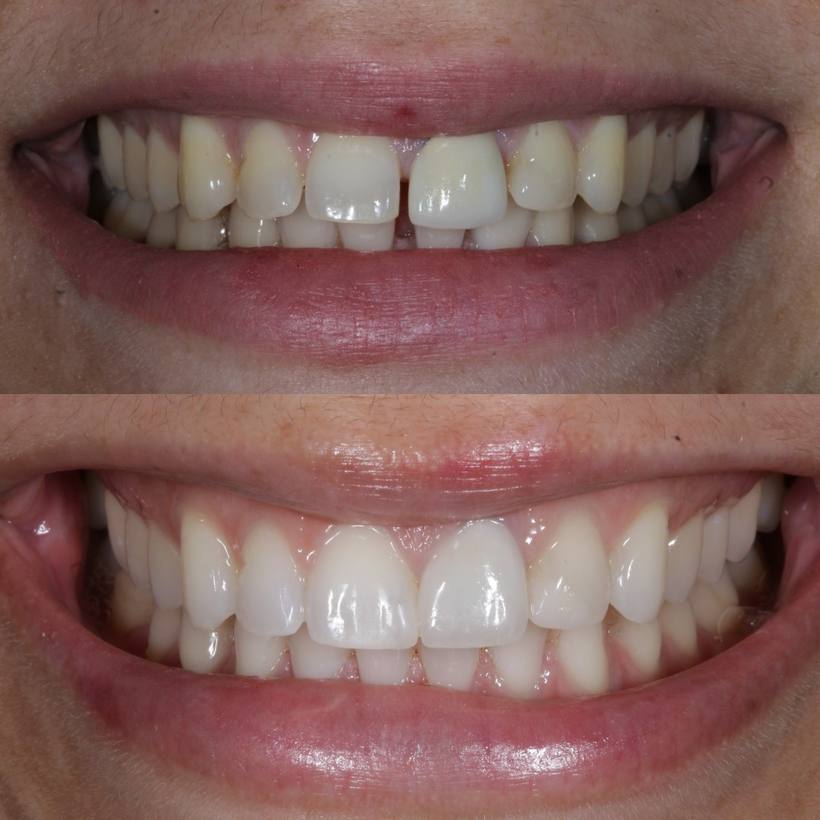
A well-made crown protects a compromised tooth from splitting and can extend its life by many years, while looking entirely natural. Modern all-ceramic materials avoid the grey line at the gum that older metal-based crowns often showed. A bridge restores a gap without surgery and is completed in a few weeks rather than months.
Aftercare and home care
Clean meticulously at the gum margin, which is where problems begin. Brush twice daily and use interdental brushes or floss daily; for a bridge, clean beneath the false tooth with superfloss or a water flosser without fail.
Avoid biting very hard objects. Wear a nightguard if you grind, as this is the main cause of ceramic fracture. Attend regular check-ups so margins can be examined and radiographs taken periodically. Report any sensitivity, looseness or change in bite promptly.
Porcelain Crowns and Bridges: before and after

Common questions
How long do crowns last?
Bridge or implant?
This page is written by Dr Steve Conteh, BDS (Hons) MSc, GDC 251055, and is general information rather than advice for your particular mouth. Your own plan, costs and risks are set out in writing before any treatment begins. Last reviewed August 2026.
Ask me about your own case
Every case begins with an unhurried consultation: a proper look, a proper listen, and a written plan you can take away and think about. There is never any pressure to proceed.