Implant-Retained Dentures.
A denture that clips onto implants, so it stays where you put it.
What is an implant-retained denture?
An implant-retained denture, sometimes called an overdenture, is a removable denture that clips securely onto two or more implants. You still take it out to clean it, but while it is in place it is held firmly rather than relying on suction, gum contact or adhesive. It sits between a conventional denture and a fixed full-arch bridge, in both cost and function.
Why has this been recommended?
This is usually recommended where a lower denture will not stay put. The lower jaw offers far less suction than the upper, and many people find a lower denture moves whenever they eat or speak. Two implants in the front of the lower jaw transform that. It may also be recommended where a fixed bridge is not achievable because of bone volume, or not appropriate because of cost, cleaning ability or general health.
What to expect during treatment
Two or more implants are placed under local anaesthetic in a straightforward surgical appointment, planned from a CBCT scan. They are left to heal for around three months. Your existing denture can usually be adjusted and worn during this period.
Once the implants have integrated, attachments are fitted to them and matching housings placed inside the denture, either by adapting your current denture or by making a new one designed for the purpose. The denture then clips on and off. You will be shown how to seat and remove it, which takes a little practice and quickly becomes second nature.
Risks and possible complications
The implants carry the same risks as any implant: failure to integrate, infection, and peri-implantitis in the long term. The attachment components are wearing parts and the nylon inserts that provide the grip need replacing periodically, typically every year or two, which is a routine and inexpensive maintenance visit rather than a complication.
The denture itself can fracture around the housings, and the gum beneath the denture continues to change shape over the years, so relines are occasionally needed.
Benefits and expected outcomes
Stability is the main gain, and for a lower denture it is often transformative. Chewing improves markedly, adhesive becomes unnecessary, and the constant low-level anxiety about a denture moving in company disappears. Bone in the front of the jaw is preserved around the implants. Compared with a fixed bridge, it is less costly, less surgically demanding, and easier to clean, because you take it out.
Aftercare and home care
Remove and clean the denture after meals where you can, and always at night. Clean the attachments on the implants themselves with a soft brush daily, as plaque collects there readily. Leave the denture out overnight in water or a cleaning solution so the gums can rest.
Attend hygiene appointments so the implants can be monitored, and expect the retention inserts to be replaced from time to time. If the denture starts to feel loose, it is usually the inserts rather than the implants, and it is a quick fix.
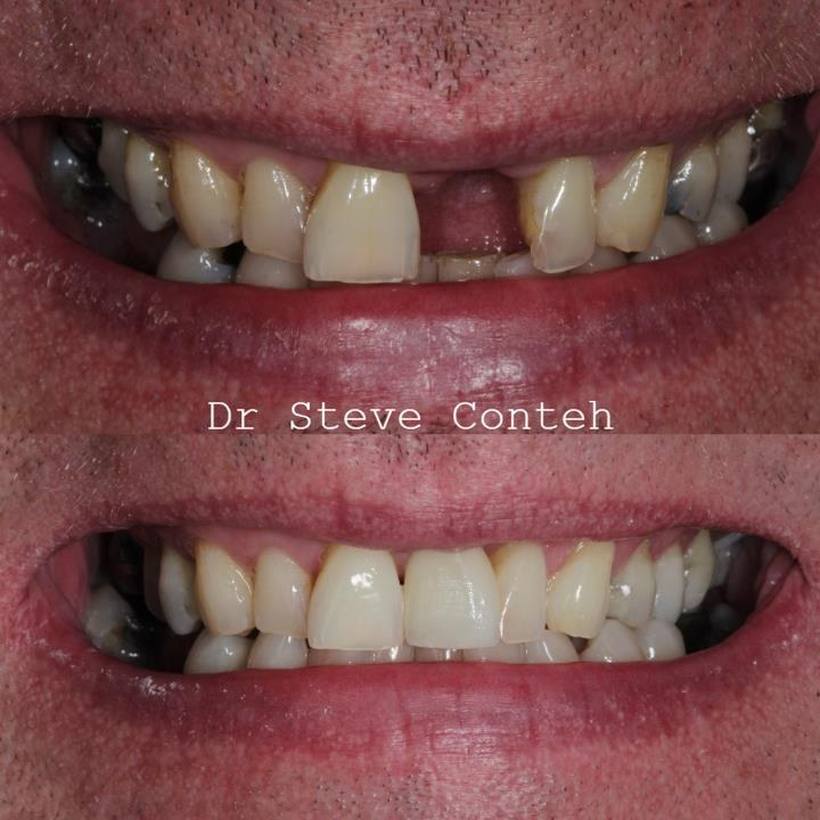
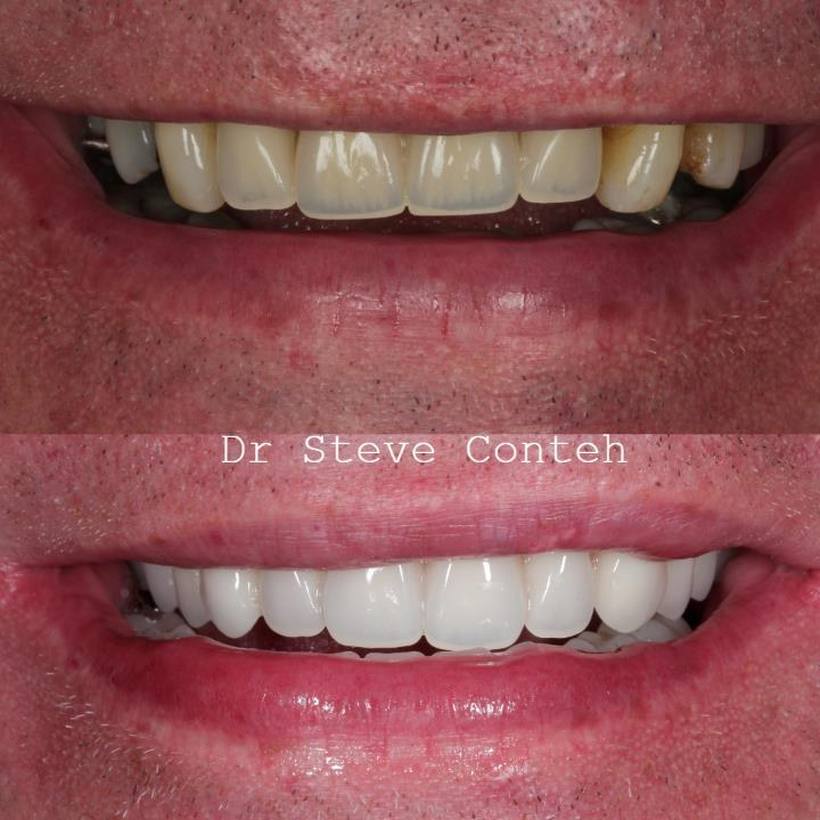
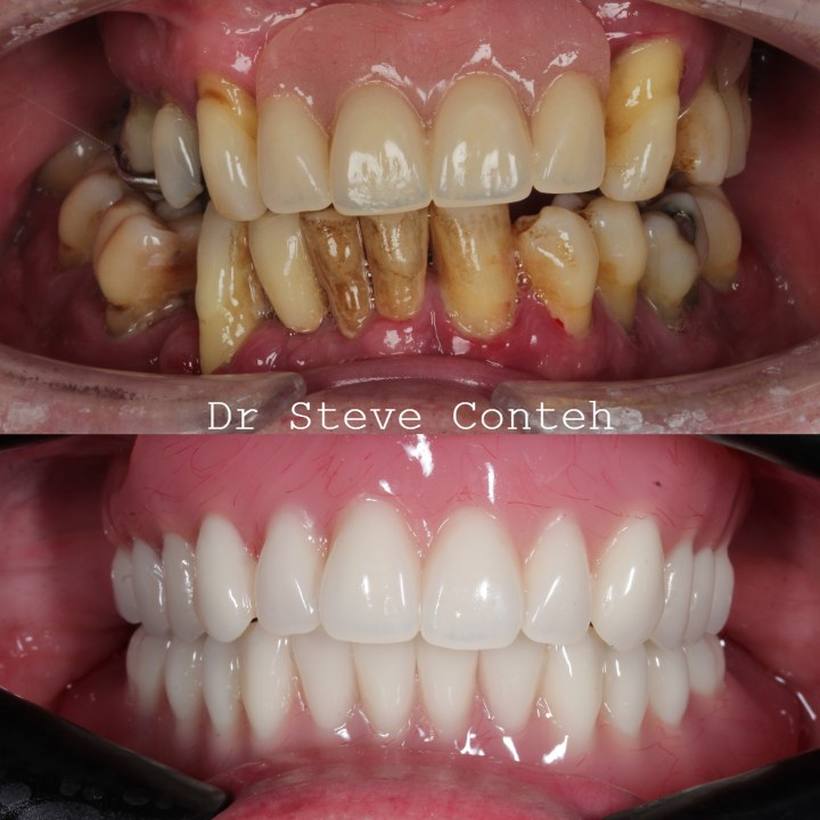
Implant-Retained Dentures: before and after
Common questions
How many implants do I need for a lower denture?
Do I still take it out at night?
This page is written by Dr Steve Conteh, BDS (Hons) MSc, GDC 251055, and is general information rather than advice for your particular mouth. Your own plan, costs and risks are set out in writing before any treatment begins. Last reviewed August 2026.
Ask me about your own case
Every case begins with an unhurried consultation: a proper look, a proper listen, and a written plan you can take away and think about. There is never any pressure to proceed.