Implant-Retained Crown or Bridge.
The visible part of implant treatment: the crown or bridge that restores how you eat, speak and smile.
What is an implant-retained crown or bridge?
An implant-retained crown is the visible part of an implant restoration, the tooth-coloured cap that attaches to the implant and restores the appearance and function of a missing tooth. A bridge, in this context, refers to a restoration supported by two or more implants that replaces multiple adjacent missing teeth. The crown or bridge is custom-made to match the colour, shape, and size of your surrounding teeth.
Why has this been recommended?
Once your implant or implants have healed and integrated with the bone, a crown or bridge is needed to complete the restoration. This is the visible, functional component of your treatment, the part that allows you to eat, speak, and smile normally. The design, material, and method of attachment will have been chosen based on the position of the tooth, your bite, and your aesthetic goals.
What to expect during treatment
After confirming that the implant has successfully integrated, an impression or digital scan is taken of the implant and surrounding teeth. This is sent to a dental laboratory where your crown or bridge is crafted, usually from zirconia or a ceramic composite, chosen for its strength and natural appearance. At a subsequent appointment, the restoration is tried in and checked for fit, bite, and aesthetics before being either cemented or screwed into place. Minor adjustments may be made at this stage to ensure everything feels comfortable and natural.
Risks and possible complications
Crowns and bridges on implants are durable, but they are not indestructible. Possible issues over time include chipping or fracture of the ceramic material, more common in patients who grind their teeth, loosening of the connecting screw, and gradual changes in the surrounding gum and bone that may affect appearance. Colour matching, while excellent in most cases, can become less exact over time as natural teeth change shade with age.
Benefits and expected outcomes
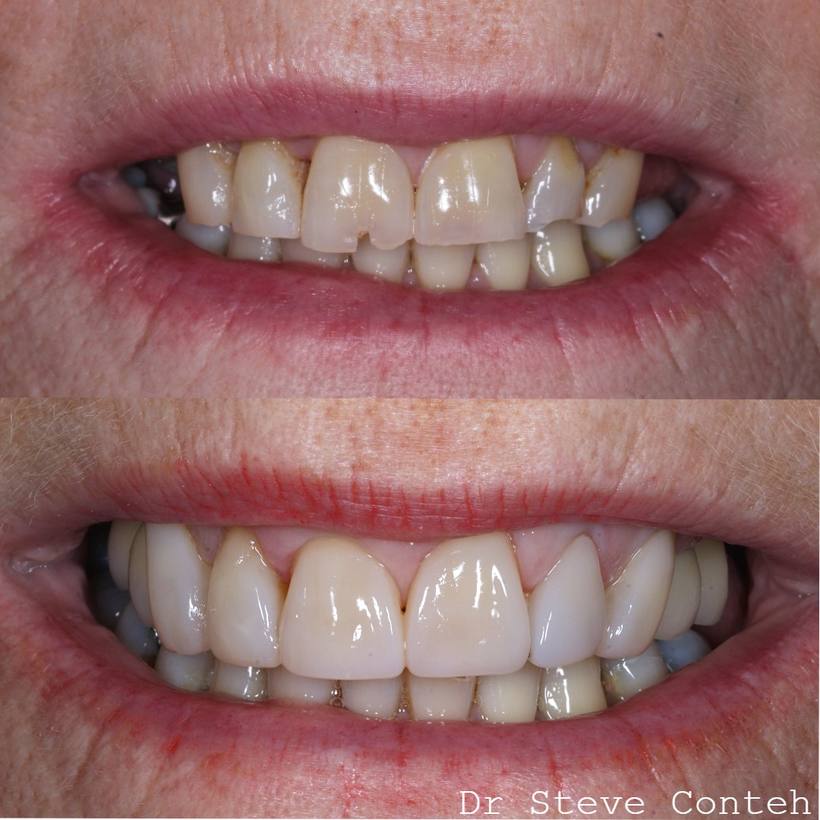
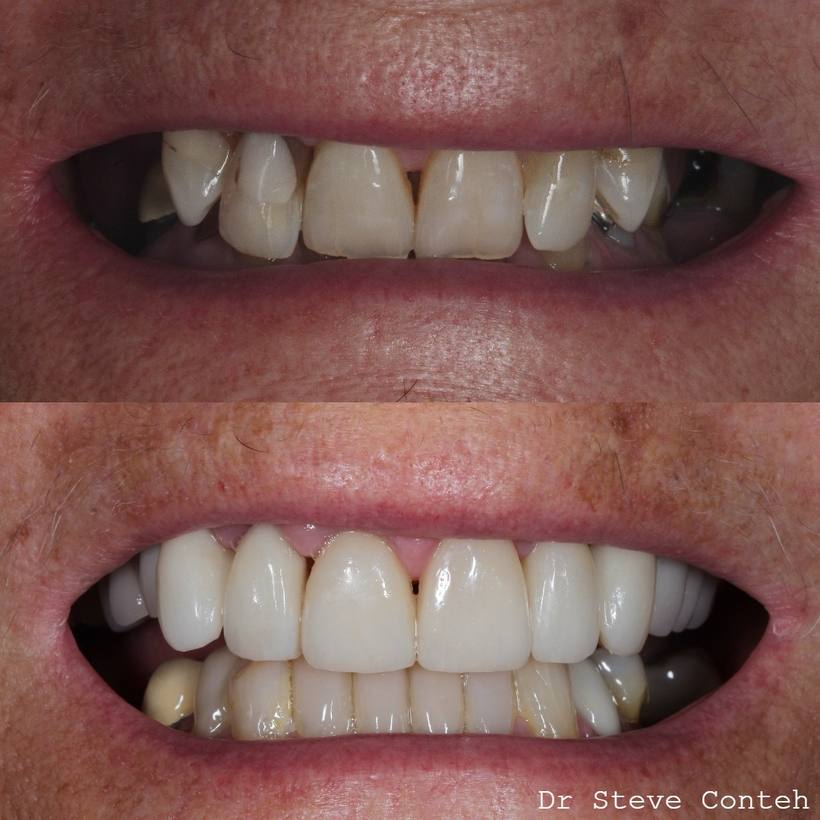
A well-made implant crown or bridge is virtually indistinguishable from a natural tooth and provides a stable, comfortable, and aesthetic result. Unlike a conventional bridge, no healthy adjacent teeth need to be prepared or crowned. Most patients are very pleased with both the appearance and the function of their restoration.
Aftercare and home care
Clean your implant crown or bridge as you would a natural tooth, brushing twice daily and cleaning between teeth with interdental brushes. For a bridge, it is important to clean beneath the pontic, the section spanning the gap, daily using a floss threader or water flosser. Attend regular hygiene and check-up appointments. If you notice any movement, cracking, or change in your bite, contact me promptly.
Implant-Retained Crown or Bridge: before and after
Common questions
Is the crown screwed or cemented?
What happens if the crown chips?
This page is written by Dr Steve Conteh, BDS (Hons) MSc, GDC 251055, and is general information rather than advice for your particular mouth. Your own plan, costs and risks are set out in writing before any treatment begins. Last reviewed August 2026.
Ask me about your own case
Every case begins with an unhurried consultation: a proper look, a proper listen, and a written plan you can take away and think about. There is never any pressure to proceed.