Full-Arch Implant Rehabilitation.
A fixed set of teeth for a whole jaw, supported by implants rather than gum and suction.
What is full-arch implant rehabilitation?
Full-arch rehabilitation replaces all the teeth in one jaw with a fixed bridge supported by a small number of implants, usually four to six. You may have heard it called All-on-4 or teeth in a day. The bridge is fixed in place and is not removed by you at home, which is the essential difference from a denture. It is cleaned around, not taken out.
Why has this been recommended?
This has been recommended because the teeth in that jaw cannot be saved predictably, or because you are already wearing a denture that moves, rubs, or limits what you can eat. Where individual teeth are failing through advanced gum disease, extensive decay or old restorations breaking down one after another, continuing to repair them tooth by tooth becomes a series of temporary fixes. A full-arch solution deals with the whole jaw once, deliberately and in a planned way.
What to expect during treatment
This is the most involved treatment I provide, and it is planned in detail before anything begins. Assessment includes clinical photographs, a CBCT scan, digital scans of your mouth, and records of how your teeth meet. From these I plan implant positions digitally and, in most cases, have a surgical guide printed so that placement follows the plan precisely.
On the day of surgery, any remaining teeth in that jaw are removed, the implants are placed, and in most cases a fixed temporary bridge is fitted the same day. You leave with teeth. That temporary is deliberately not the final result: it is a working prototype that lets us test the look, the bite, the speech and the cleaning access while the implants heal.
Healing takes around three to six months. During this time we review the temporary, and any changes you want to the shape, length or colour are made at this stage rather than after. When the implants have integrated, final scans are taken and the definitive bridge is made, usually in zirconia or a titanium-reinforced material. It is fitted, checked in detail, and you move into a maintenance schedule.
Risks and possible complications
Full-arch treatment is major dentistry and the risks deserve to be stated plainly. Individual implants can fail to integrate; with four to six supporting a bridge, the loss of one may or may not compromise the whole depending on its position. Infection, swelling and bruising are expected to a degree and occasionally exceed it.
Speech is commonly affected for the first few weeks while the tongue adapts, and some people find this more disconcerting than the surgery. The temporary bridge can chip or fracture, which is one of the reasons it exists. There is a risk of altered sensation in the lower jaw where implants sit near the nerve, and of sinus involvement in the upper jaw.
Longer term, peri-implantitis, inflammation of the gum and bone around implants, is the main threat to longevity, and it is strongly linked to smoking and to inadequate cleaning. The definitive bridge will need maintenance over the years, and eventually components may need replacing. This is a long-term relationship rather than a one-off procedure.
Benefits and expected outcomes
For the right patient the change is substantial. Chewing function returns close to that of natural teeth, far beyond what a denture allows. Nothing moves when you eat or speak. There is no palate coverage in the upper jaw, so taste and temperature come back. The bone that would otherwise continue to shrink under a denture is preserved around the implants.
Most of my full-arch patients describe the difference in terms of confidence rather than function: eating in company without thinking about it, and smiling without editing themselves first.
Aftercare and home care
Cleaning is the whole game. You will be shown how to clean beneath and around the bridge with superfloss, interdental brushes and a water flosser, and this needs doing daily without exception. Hygiene appointments are typically every three to four months, at which the bridge may be unscrewed and cleaned professionally.
A nightguard is often recommended, particularly if you grind. Smoking materially increases the risk of losing implants and I will be direct with you about that. Attend every review; problems caught early around implants are usually manageable, and problems caught late often are not.
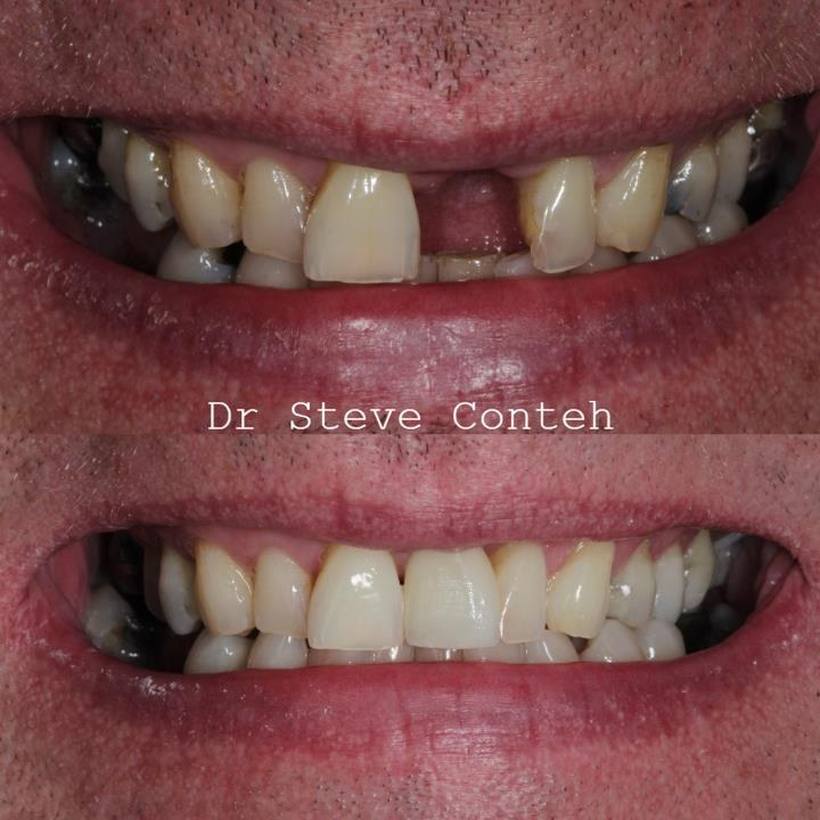
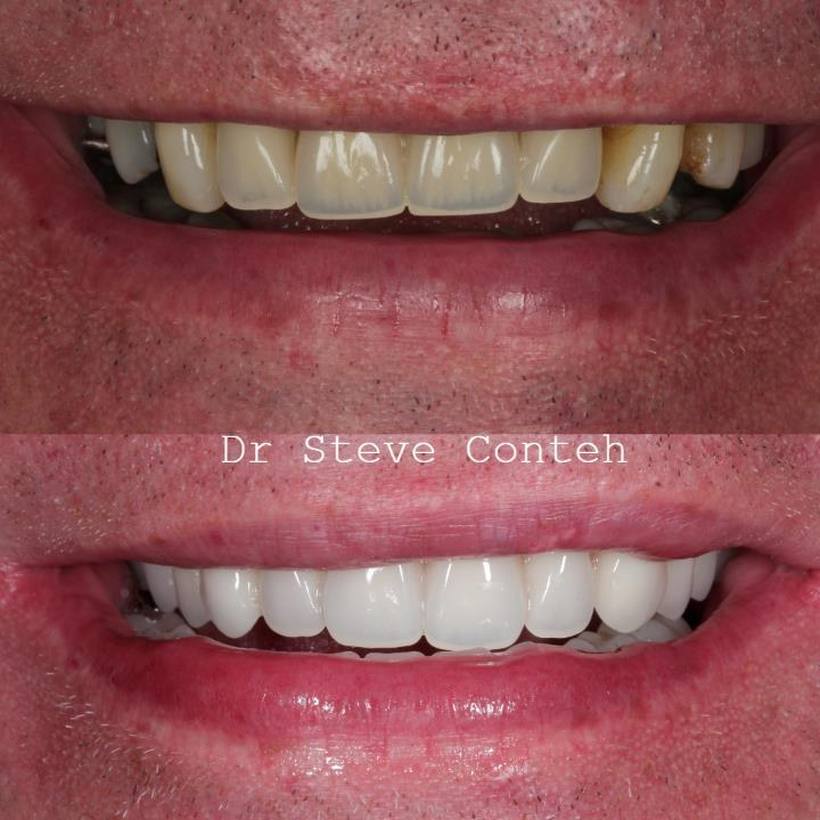
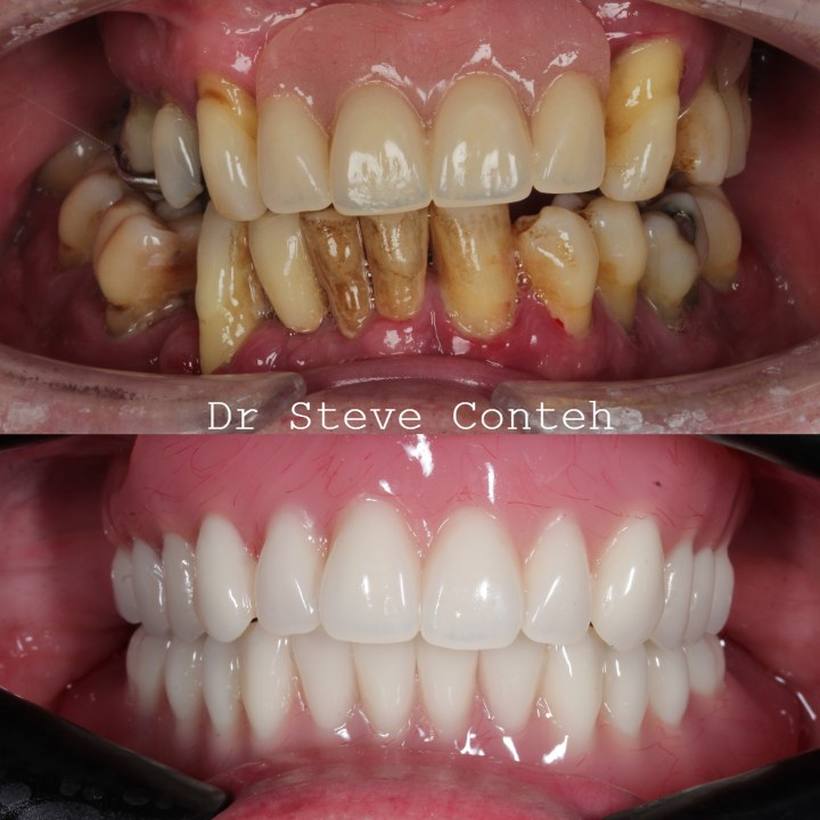
Full-Arch Implant Rehabilitation: before and after
Common questions
Is All-on-4 the same as full-arch rehabilitation?
Will I leave with teeth on the day?
Is it better than a denture?
How long does full-arch treatment take?
This page is written by Dr Steve Conteh, BDS (Hons) MSc, GDC 251055, and is general information rather than advice for your particular mouth. Your own plan, costs and risks are set out in writing before any treatment begins. Last reviewed August 2026.
Ask me about your own case
Every case begins with an unhurried consultation: a proper look, a proper listen, and a written plan you can take away and think about. There is never any pressure to proceed.