Clear Aligners and Invisalign.
Straightening teeth with a series of removable clear trays, often as the groundwork that makes later cosmetic work smaller.
What are clear aligners?
Clear aligners are a series of thin, transparent, removable trays that move teeth gradually into a planned position. Each aligner is worn for one to two weeks and moves the teeth a fraction of a millimetre before being replaced by the next in the series. Small tooth-coloured attachments are usually bonded to some teeth to give the aligners something to grip and to control particular movements.
Why has this been recommended?
Alignment is often recommended before cosmetic work rather than instead of it. Straightening teeth first means any bonding or veneers afterwards can be thinner, smaller and kinder to the tooth, and sometimes removes the need for them altogether. It may also be recommended to improve cleaning access where crowding is contributing to gum problems, or to create space to restore a tooth properly.
What to expect during treatment
Treatment begins with photographs, digital scans and, where needed, radiographs. From these a three-dimensional plan of the movements is produced, and you will be shown a simulation of the projected result before committing. That simulation is a plan, not a promise, and I will tell you where I think it is optimistic.
Attachments are bonded at the fitting appointment and you are given your first aligners. They must be worn twenty to twenty-two hours a day, removed only to eat and drink anything other than water. Compliance is the single largest factor in whether treatment finishes on time and on target. Reviews are usually every six to ten weeks. Most cases run six to eighteen months, and mid-course refinements with additional aligners are common and normal rather than a sign that something has gone wrong.
Risks and possible complications
Discomfort and pressure for a day or two with each new aligner is expected. A temporary lisp is common and settles.
More substantially: teeth may not track as planned, requiring refinements or occasionally a change of approach. Interproximal reduction, slim polishing between teeth to create space, is often needed and is irreversible though it removes only a fraction of a millimetre of enamel. Root shortening can occur with any orthodontic movement and is usually of no consequence. Decalcification and decay happen if aligners are worn over unclean teeth or with sugary drinks, which is why hygiene during treatment matters.
Relapse is the most under-appreciated risk. Teeth move back if retainers are not worn, and this is not a possibility but a certainty.
Benefits and expected outcomes
Aligners are discreet, removable, and generally more comfortable than fixed braces. Cleaning is easier than with brackets and wires because you take them out. For the great majority of adult crowding, spacing and mild-to-moderate bite corrections, results are predictable and excellent.
Beyond appearance, aligned teeth are easier to clean, distribute biting forces more evenly, and provide a far better foundation for any restorative work afterwards.
Aftercare and home care
Retention is lifelong, and I would rather be blunt about that at the start than apologetic about it later. Most patients have a fine bonded wire behind the front teeth plus a clear removable retainer worn nightly. Bonded retainers need checking at every visit, as they can debond quietly.
During treatment, clean your teeth before reinserting aligners, rinse the aligners under cool water, and never drink anything hot or sugary while wearing them. Keep the previous set as a backup. After treatment, wear retainers as instructed for as long as you wish your teeth to stay where they are.
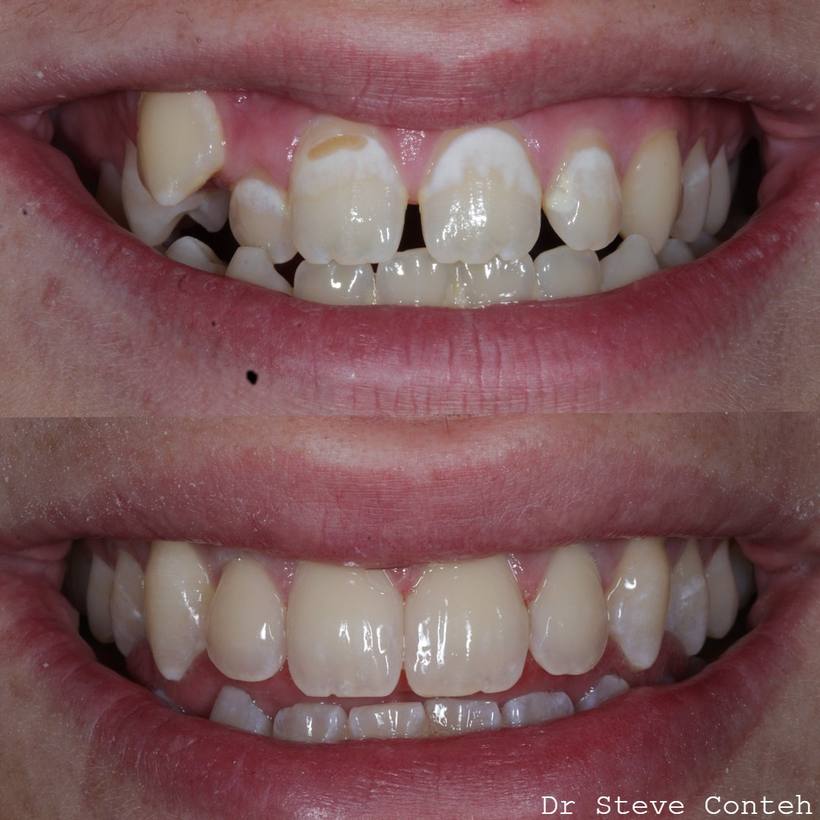
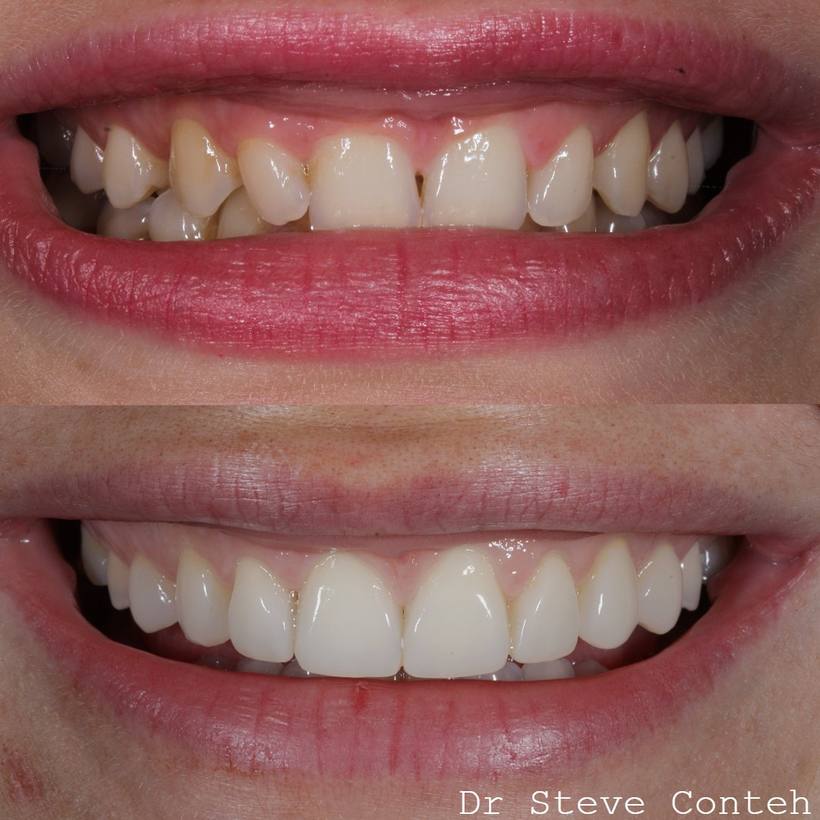
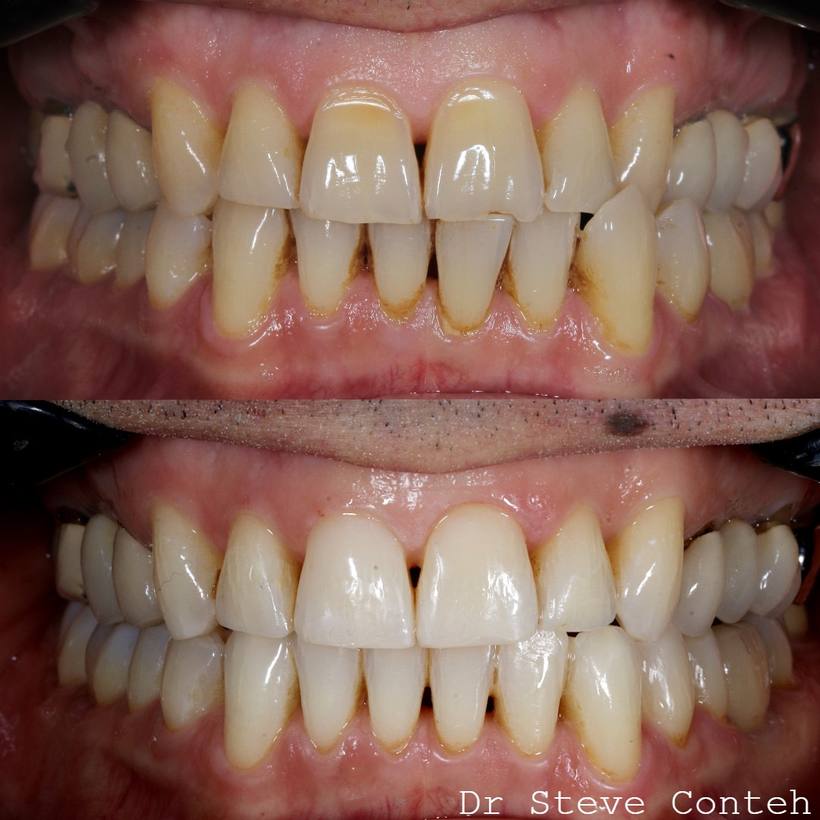
Clear Aligners and Invisalign: before and after
Common questions
How long does Invisalign take?
Do I have to wear retainers forever?
Are clear aligners as effective as fixed braces?
Should I straighten my teeth before having bonding or veneers?
This page is written by Dr Steve Conteh, BDS (Hons) MSc, GDC 251055, and is general information rather than advice for your particular mouth. Your own plan, costs and risks are set out in writing before any treatment begins. Last reviewed August 2026.
Ask me about your own case
Every case begins with an unhurried consultation: a proper look, a proper listen, and a written plan you can take away and think about. There is never any pressure to proceed.