Building up the bone first.
Rebuilding a little of your jawbone, so your implant has something solid and healthy to sit in.
What is bone grafting?
Bone grafting simply means building up an area of your jaw where bone has been lost. When a tooth comes out, the bone that used to hold it gradually shrinks away, because it no longer has a job to do. Sometimes that leaves too little bone for an implant to sit in safely, and a graft puts back what is needed. It sounds rather dramatic, and it really is not.
Why I have suggested this for you
Your x-rays and 3D scan have shown me that there is not quite enough bone in one or more places to hold an implant securely as things stand. Please do not take this as bad news. It is very common, especially if some time has passed since you lost the tooth, or if gum disease took some bone along the way. It simply means we add one step before the implant.
What actually happens
Most of the time I do the graft in the same appointment as placing your implant. If quite a lot of bone is needed, it becomes its own appointment a few months beforehand. Either way it is done under local anaesthetic and people generally find it very manageable. The graft material may be your own bone taken from nearby in the mouth, carefully processed donated bone, or a synthetic substitute, and I will explain which I am recommending for you and why. It is packed into the area that needs building up and covered with a fine protective membrane where that helps it heal.
Grafts take longer to heal than a straightforward implant, usually somewhere between three and nine months depending on how much was needed. Your body is quietly turning that graft into your own living bone during this time, which is worth the wait. All you have to do is protect the area and follow the instructions I give you. Once it has matured, we can go ahead with the implant.
The risks you should know about
Grafting is a well-established procedure and it usually goes very smoothly, but you should know what can happen. There is a risk of infection, and of the graft not taking properly and needing to be done again. Swelling and soreness are often a bit more noticeable than after a simple implant, so do plan a quiet few days. Occasionally the membrane becomes exposed or healing is slower than expected. Smoking makes graft failure considerably more likely, so I would really encourage you to stop while it heals, and I am happy to help you with that. Sometimes a second, smaller graft is needed before we can place the implant.
What you should get out of it
A graft that has worked gives your implant a solid foundation to sit in for years to come. Without enough bone, even a beautifully placed implant is more likely to let you down later. I know this step adds time and cost, and I would not suggest it unless I thought it would make a real difference to how long your implant lasts.
Looking after it at home
The main thing is to leave the area well alone while it settles. Try not to rinse hard, and resist the urge to poke it with your tongue or your finger, which is easier said than done. Gentle warm saltwater rinses are usually fine from the day after. Take any antibiotics or painkillers exactly as I have prescribed them. Stick to soft food for the first week or two and give hard, crunchy or very hot things a miss. And please come to your follow-up appointments so I can check it is healing nicely. If anything worries you in between, just ring.
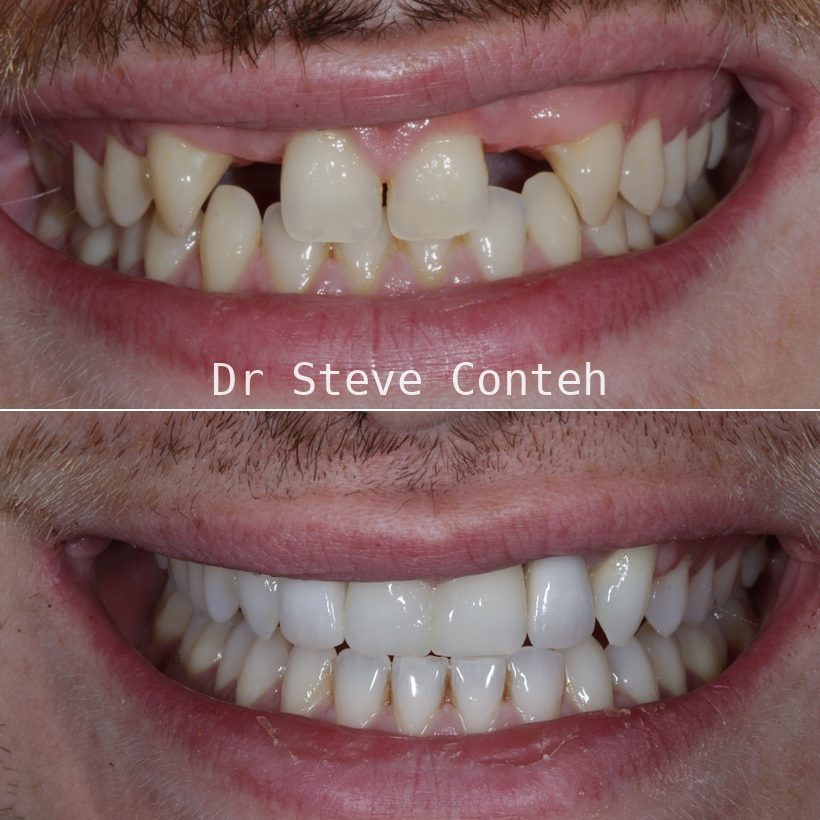
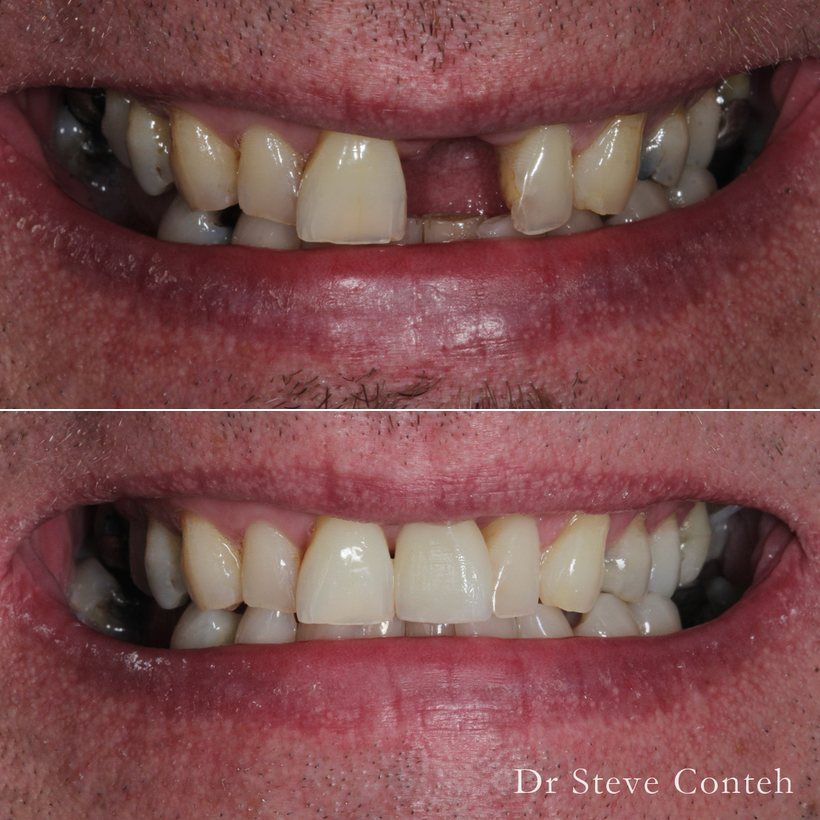
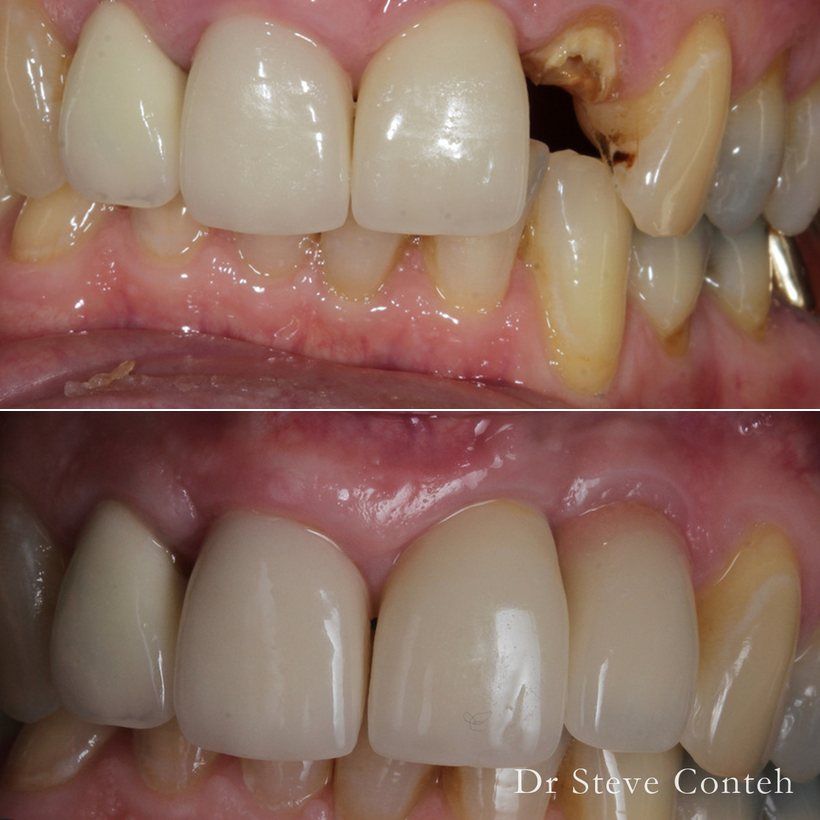
Implant results: before and after
Questions patients often ask me
Do I definitely need a bone graft for an implant?
Where does the graft material come from?
Can I have an implant if I have been told I do not have enough bone?
Written by me, Dr Steve Conteh, BDS (Hons) MSc, GDC 251055. It explains the treatment in general terms so you can understand it. Your personal plan, with your costs and your risks, always comes to you in writing before anything begins. Please do bring your questions to your appointment. Last reviewed August 2026.
Tell me what is worrying you
The first appointment is a conversation more than anything else. I will listen properly, have a careful look, and then write everything down for you to take home. You can think about it for as long as you need. Nobody here will chase you.